Ammonia vs. CO2 vs. HFC: Choosing the Right Refrigerant
Navigating the refrigerant landscape can be complex. We break down the pros, cons, and best use cases for Ammonia, CO2, and HFC systems.
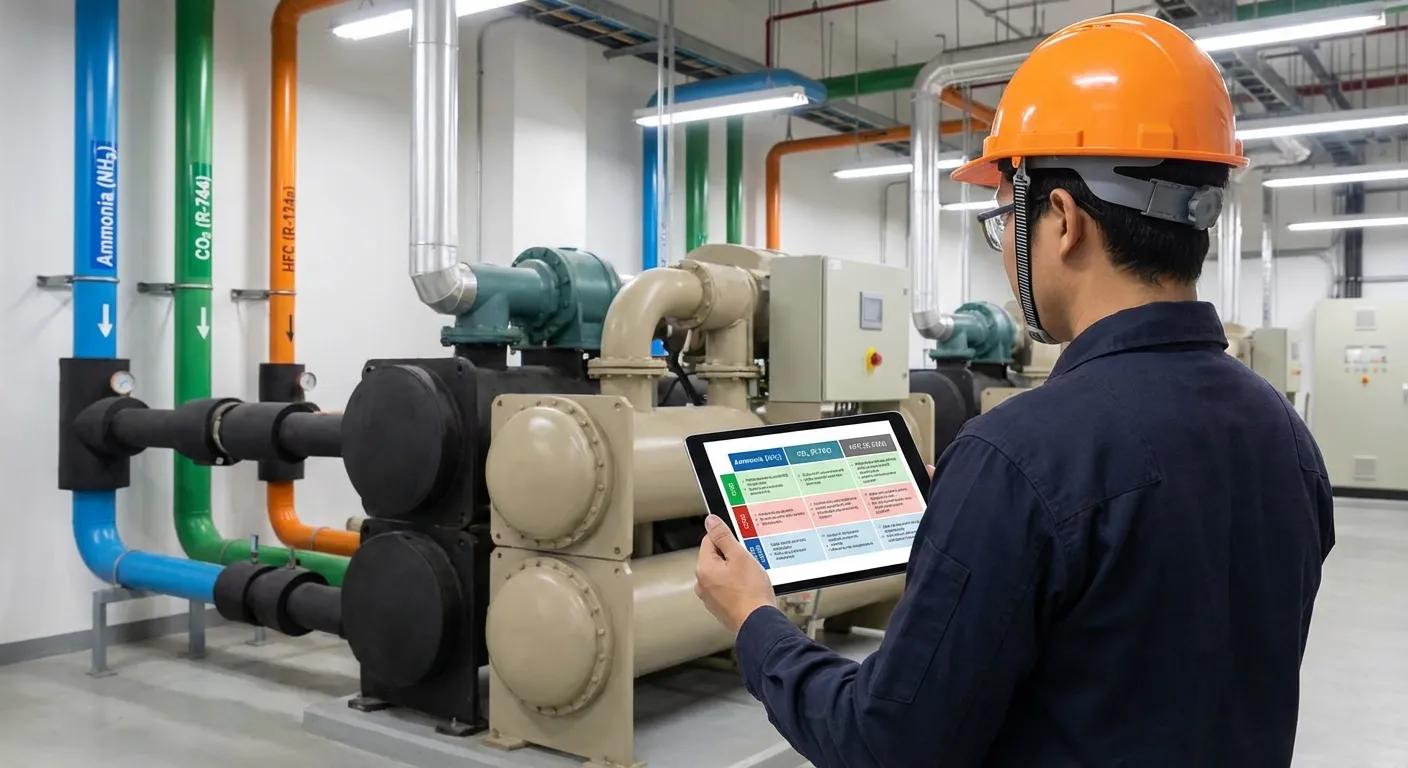
Selecting the right refrigerant is one of the most critical decisions in the design of a new industrial refrigeration system. The choice impacts your energy efficiency, regulatory compliance burden, safety protocols, and long-term operating costs.
Historically, Ammonia (NH3) was the undisputed king of industrial refrigeration. Today, however, CO2 (Carbon Dioxide) has emerged as a strong contender, and HFCs (Hydrofluorocarbons) still have a niche, though they are facing regulatory phase-downs.
Here is a breakdown of the three primary contenders to help you understand which might be right for your facility.
1. Ammonia (NH3 / R-717)
The Gold Standard for Efficiency
Ammonia has been used for over a century and remains the most energy-efficient refrigerant available. It has zero Ozone Depletion Potential (ODP) and zero Global Warming Potential (GWP).
Pros:
- Unmatched Efficiency: superior thermodynamic properties mean lower electricity bills.
- Low Cost: Ammonia is inexpensive and readily available.
- Environmentally Friendly: Completely natural and future-proof against environmental regulations.
- Self-Alarming: Its strong odor acts as an immediate warning of a leak.
Cons:
- Toxicity: It is toxic in high concentrations. This requires strict safety protocols and, for large systems (over 10,000 lbs), compliance with OSHA PSM (Process Safety Management) and EPA RMP (Risk Management Plan).
- Material Compatibility: It is corrosive to copper, so systems must be built with steel or stainless steel.
Best For: Large cold storage warehouses, food processing plants, and distribution centers where efficiency is paramount and the facility can manage the safety program.
2. Carbon Dioxide (CO2 / R-744)
The Rising Star
CO2 is gaining massive popularity, especially in "transcritical" systems. Like ammonia, it is a natural refrigerant with negligible environmental impact (GWP = 1).
Pros:
- Safety: It is non-toxic and non-flammable. This removes the heavy regulatory burden of OSHA PSM.
- High Grade Heat Recovery: CO2 systems operate at high pressures and temperatures, making them excellent for reclaiming waste heat for hot water or underfloor heating.
- Compact: The high density of CO2 allows for smaller piping and compressors.
Cons:
- High Pressure: Systems operate at very high pressures (often > 1000 psi), requiring specialized components and training.
- Efficiency in Hot Climates: Traditional CO2 systems can lose efficiency in very hot ambient temperatures, though new technologies (ejectors, adiabatic condensers) are mitigating this.
- Complexity: The control strategies for transcritical CO2 are more complex than standard systems.
Best For: Supermarkets, smaller industrial facilities, freezers located in populated areas where ammonia safety risks are a concern, and facilities that need significant hot water (e.g., wash-down facilities).
3. HFCs (Hydrofluorocarbons) / HFO Blends
The Fading Incumbent
Synthetic refrigerants like R-404A or R-507 were once common alternatives to ammonia. However, due to their high GWP, they are being aggressively phased out by regulations like the AIM Act in the US and F-Gas regulations in Europe. Newer "low-GWP" synthetic blends (HFOs) are available but come with trade-offs.
Pros:
- Familiarity: Most technicians know how to work on these systems.
- Lower Initial Equipment Cost: Components are often cheaper and widely available (though this gap is closing).
- Safety: Generally non-toxic and non-flammable (though some newer A2L blends are mildly flammable).
Cons:
- Regulatory Risk: High-GWP HFCs are being banned or capped. Prices for these refrigerants are skyrocketing as supply dwindles.
- Future Uncertainty: Investing in an HFC system today is investing in technology with an expiration date.
- Leak Rates: Synthetic systems often have higher leak rates, which is becoming expensive and environmentally damaging.
Best For: Small, commercial-scale equipment (like walk-in coolers) where the cost of an industrial Ammonia or CO2 system cannot be justified. For industrial scale, HFCs are rarely recommended for new builds today.
Summary Comparison
| Feature | Ammonia (NH3) | CO2 (R-744) | HFCs / Synthetics | | :--- | :--- | :--- | :--- | | Efficiency | Excellent | Very Good | Good | | GWP | 0 | 1 | High (Phasing Out) | | Toxicity | High | Low | Low | | Regulatory Burden | High (PSM/RMP) | Low | Increasing (AIM Act) | | Future Proof? | Yes | Yes | No |
Conclusion
For most large-scale industrial applications, the choice is increasingly between Ammonia (for maximum efficiency) and CO2 (for safety and regulatory simplicity). Often, a Cascade System—using a small ammonia charge to cool a CO2 loop—offers the best of both worlds: the efficiency of ammonia without the large charge and regulatory headaches.
Choosing the right path requires a detailed analysis of your specific load profile, location, and long-term business goals.
IR Pros Team
Industrial Refrigeration Experts