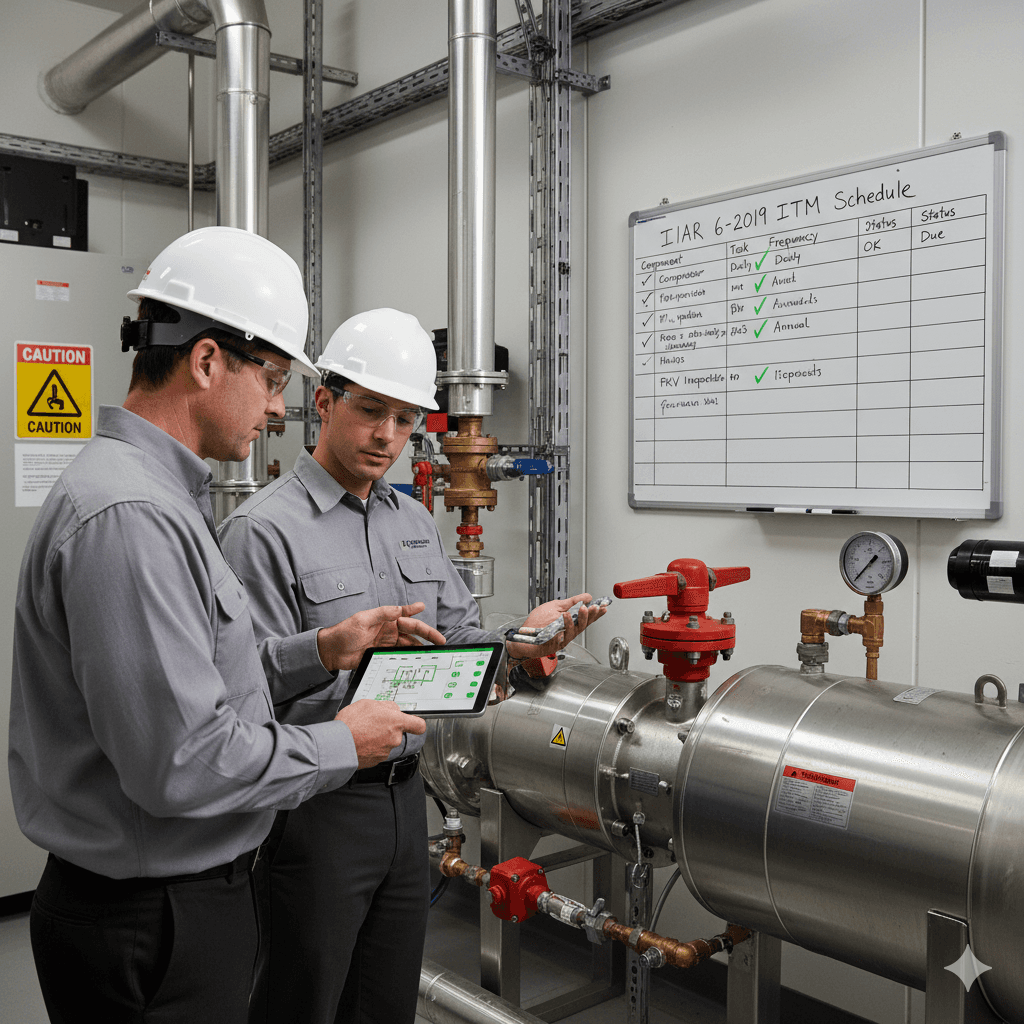
How AI is Transforming Industrial Compliance
Explore how artificial intelligence is revolutionizing industrial compliance for high-hazard refrigeration systems—and how RefrigAgent delivers safety, efficiency and audit-readiness.
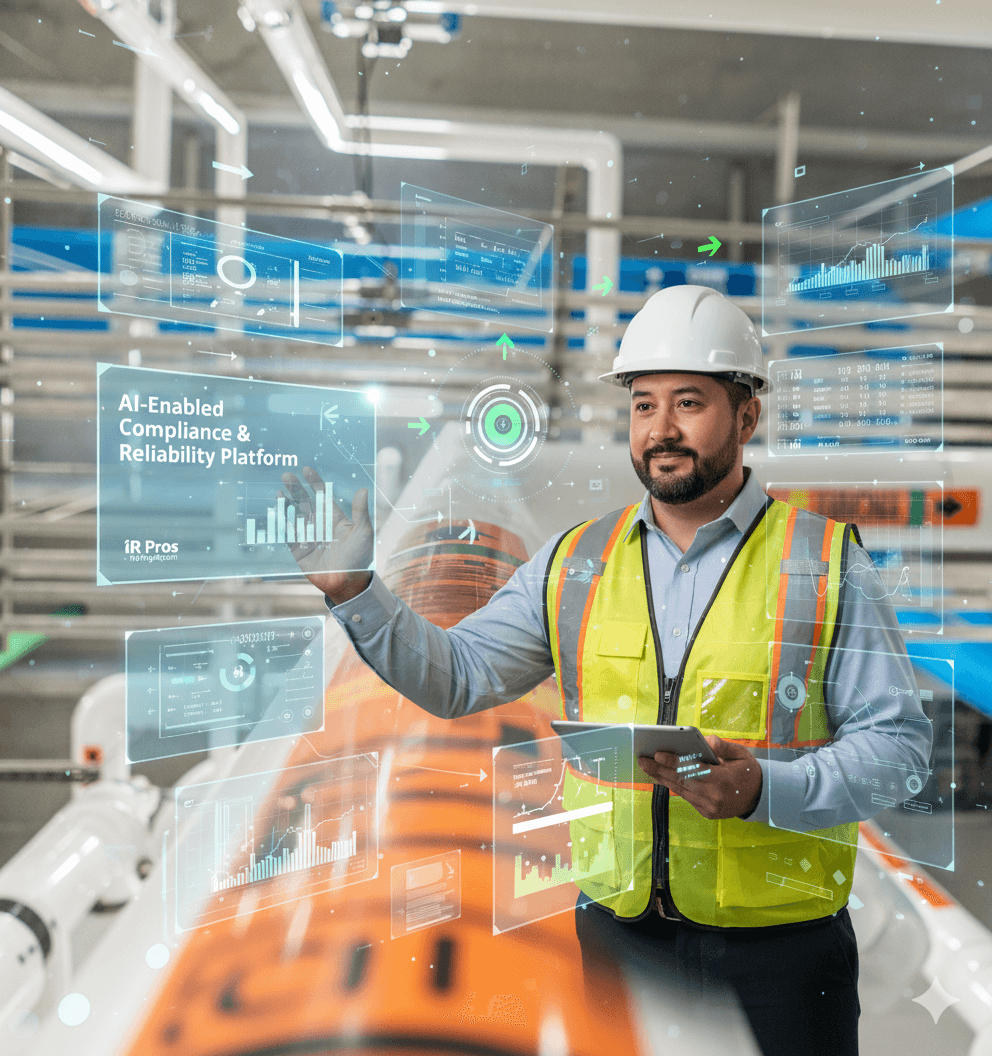
Why facility leaders can't afford to ignore it
In today's complex industrial landscape—from ammonia and CO₂-based refrigeration to high-hazard mechanical systems—compliance is no longer just a regulatory checkbox. It's a strategic imperative. The rise of artificial intelligence (AI) is changing the game: shifting compliance from reactive rule-checking to proactive risk management, real-time monitoring and smarter decision support.
As one report puts it: "AI adoption in compliance functions will mean different things… at its most basic, AI can deliver efficiency gains … but beyond automation, AI is helping teams become smarter, with intelligent agents increasingly monitoring regulatory changes in real time."
For industrial refrigeration systems—where ammonia leaks, mechanical integrity, OSHA PSM and EPA RMP exposures all converge—the stakes are even higher. When you combine IR Pros' deep domain expertise with an AI-enabled product like RefrigAgent, you're looking at a powerful platform for compliance, reliability and efficiency.
The key ways AI is changing industrial compliance
Here's how AI is making a real difference—especially in industrial settings:
1. Real-time monitoring + anomaly detection
In many industrial operations, compliance relies on periodic inspections, paper logs or manual reviews. That leaves long windows for unnoticed deviations or unsafe conditions. With AI-enabled sensors and analytics, you can detect patterns, anomalies or failing conditions before they escalate. AI technologies are playing a crucial role in improving workplace safety and ensuring compliance with complex industrial regulations.
2. Intelligent automation of documentation & auditing
Compliance demands are increasing across the board—and keeping up manually is unsustainable. AI can automate tagging, indexing, retrieval of inspection records, linking work-orders to compliance obligations and generating audit-ready reports. As one insight states: "The operational [side] of compliance … entails a lot of busy work like checking documents. This is where AI will come in and help."
3. Predictive insights and risk forecasting
Rather than just verifying that you complied with "last month's" requirement, AI enables you to forecast where you'll have compliance risks next (equipment failures, regulatory changes, shift exposures) so you can act proactively. For example, intelligent AI agents increasingly monitoring regulatory changes in real time boost agility and reduce exposure to penalties.
4. Smarter integration with safety, reliability and operational systems
In high-hazard industries, compliance isn't separate—it's embedded in operations (maintenance, safety, reliability, controls). AI lets you connect these silos. For refrigeration systems especially, linking mechanical integrity (MI), leak detection, regulatory audits, preventive maintenance and data analytics becomes possible. This integrated approach supports regulatory obligations (OSHA PSM, EPA RMP) and operational performance.
5. Governance, traceability and audit readiness
AI doesn't just help you do compliance better—it helps you prove it. Transparency, explainability, audit trails, and governance frameworks are becoming key as regulators shift focus. AI compliance is not just about laws—it's about building trust, transparency and safety in how AI systems operate.
Why this matters for industrial refrigeration leaders
When you're managing an ammonia or CO₂ refrigeration plant, you're operating in a high-hazard, heavily regulated environment. Here's how AI-enabled compliance delivers real value:
-
Reduced risk of catastrophic events: An ammonia leak isn't just a maintenance issue—it's a safety, environmental, regulatory and business interruption event. AI-enabled sensors and real-time monitoring shorten detection times and trigger faster response.
-
Improved uptime and reliability: Rather than waiting for an inspection finding or a regulatory audit, you stay ahead of issues. When compliance and reliability go hand in hand, you reduce unplanned downtime and avoid the "shock" of compliance failures.
-
Lower administrative burden: Manual compliance (inspections, logs, regulatory updates) consumes hours and headcount. AI automates much of the heavy lifting, freeing your team to focus on strategy instead of paperwork.
-
Better capital and operational decisions: With richer data from AI systems, you can make more informed decisions about upgrades, parts replacement, risk mitigation—all tied into regulatory and reliability planning.
-
Competitive and brand advantage: As ESG, safety, regulatory posture and reliability become differentiators, being able to say "we use AI-enabled compliance and reliability systems" sets you apart.
-
Audit readiness and regulatory defensibility: With compliance linked to operations, digitally logged and analyst-driven, your documentation stands up better in audits—helping avoid fines, shutdowns or reputational damage.
Spotlight: RefrigAgent from IR Pros – Leading the way
Now let's put all this into context with IR Pros' own innovation.
As a leading provider of industrial refrigeration systems (ammonia, CO₂, freon), IR Pros brings deep domain expertise in design, build, maintenance and modernization. With the launch of RefrigAgent, IR Pros is turning that expertise into a digital-AI compliance and reliability platform for its industrial refrigeration clients.
What RefrigAgent offers (for facility managers)
Here are the typical features you should highlight:
-
Continuous asset health monitoring: Sensors and data streams feed the AI platform to detect early signs of equipment drift, refrigerant leaks, system inefficiencies or safety hazards in ammonia/CO₂ systems.
-
Regulatory compliance tracking: RefrigAgent maintains a compliance map specific to refrigeration systems (e.g., ammonia safety, PSM Mechanical Integrity, EPA RMP, IIAR standard alignment) and links equipment data to tasks, schedules and audits.
-
Automated inspection & maintenance workflows: Scheduled inspections, real-time alerts, AI-recommended preventive tasks and digital forms—all tied into compliance obligations and reliability goals.
-
Data-driven analytics and dashboards: Real-time dashboards showing system performance, compliance status, maintenance backlog, risk indices, and the ROI of reliability investments.
-
Audit-ready documentation and traceability: Every inspection, leak event, part replacement, technician sign-off is logged, timestamped and accessible—helping with audit readiness, internal governance and regulatory defence.
-
Safety and risk minimization: In a high-hazard domain like ammonia refrigeration, reducing the time to detect an anomaly or leak, shortening response time, and documenting actions are big wins from a safety and compliance standpoint.
Why RefrigAgent gives you a competitive edge
-
IR Pros is not just a software vendor—they bring industry-specific refrigeration expertise, meaning the AI platform is built around the real hazards, compliance rules, equipment typologies and failure modes relevant to refrigeration systems.
-
The platform is scalable across distributed sites—useful for manufacturing, cold-storage, food processing, warehousing operations that run multiple plants.
-
By combining AI, domain expertise and service (monitoring, maintenance, modernization), IR Pros offers a holistic solution—not just software, but a compliance + reliability ecosystem.
For facility managers, that means: fewer surprises, better data, stronger compliance posture, lower downtime and ultimately cost savings.
Best practices for adopting AI in industrial compliance
Before you jump in, here are some key steps and guardrails to ensure success:
Start with the data
AI's performance depends on high-quality data: sensor readings, historical maintenance logs, incident history, inspection records. If your data is fragmented (paper logs, spreadsheets, manual entries), start by cleaning and consolidating. Successfully integrating AI in regulated industries requires a careful balance between innovation and risk management.
Define the compliance use-cases
Which compliance risks matter most in your facility? Ammonia leak detection, pressure vessel inspections, mechanical integrity, safety interlocks? Map the rules, obligations, inspections and identify where AI can reduce gaps or speed up response.
Engage people and process
AI isn't plug-and-play. You'll need to update workflows, train technicians, adjust inspections, set up alerts, define roles. Resistance or lack of adoption kills potential value. Companies should put systems in place that allow AI and human workers to collaborate effectively.
Build governance & audit-readiness
Ensure that your AI implementation is transparent, traceable and able to generate audit-quality logs and documentation. Regulatory expectations are tightening—simply deploying AI without governance can backfire.
Scale-fast by piloting
Start with one plant or system, fine-tune your sensors, workflows and analytics. Once you have wins, scale to other assets/sites. Using IR Pros + RefrigAgent you can leverage both domain support and technology.
Measure value and iterate
Track key-performance indicators: compliance inspection completion rate, anomaly detection time, downtime prevented, parts cost reduction, audit findings reduction. Use metrics to drive further adoption.
Take-away for Facility Managers
If you're in charge of a refrigeration-intensive facility (cold storage, food processing, logistics, large scale refrigeration), here are the simple truths:
- Manual, disconnected compliance and reliability systems are no longer sufficient in today's fast-moving regulatory and hazard-heavy environment.
- AI is no longer futuristic—it's already enabling smarter, faster, more defensible compliance and operation.
- Selecting a partner with deep domain expertise (like IR Pros) and an AI-enabled platform (like RefrigAgent) gives you strategic advantage: fewer surprises, stronger safety posture, improved reliability, lower downtime, better audit readiness.
- The best time to act is now—build your data foundation, define the use-cases, pilot, scale and govern effectively.
IR Pros Team
Industrial Refrigeration Experts